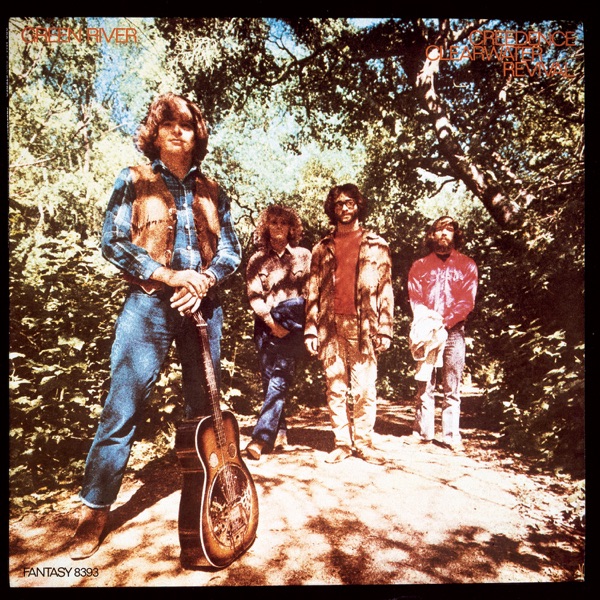
Bad Moon Rising
Creedence Clearwater Revival · Green River
A catchy warning of coming storms, more anxious than spiritual.
Where the words land
Signal: Worth Weighing, leaning edifying.
What do these signals mean?
- Edifying: Points the heart toward God, truth, hope, or love.
- Worth Weighing: Real good and real concern together. Test it before you take it in.
- Strained: Strains against Scripture: leans toward what could dull or mislead.
- At Odds: At odds with Scripture: celebrates what it warns against. Little here builds up.
Weighed against Scripture
“I see earthquakes and lightnin”
“There will be signs in the sun and moon and stars, and on the earth dismay among the nations, bewildered by the roaring of the sea and the surging of the waves. Men will faint from fear and anxiety over what is coming upon the earth, for the powers of the heavens will be shaken.”
The song's cosmic unrest and dread of coming disaster mirror Jesus' description of signs in the sky unsettling the hearts of people.
“I hear the voice of rage and ruin”
“My anguish, my anguish! I writhe in pain! Oh, the pain in my chest! My heart pounds within me; I cannot be silent. For I have heard the sound of the horn, the alarm of battle. Disaster after disaster is proclaimed, for the whole land is laid waste. My tents are destroyed in an instant, my curtains in a moment.”
Jeremiah's anguished cry over coming destruction shares the same tone of visceral alarm found in this verse.
“Hope you are quite prepared to die”
“Therefore, that is what I will do to you, O Israel, and since I will do this to you, prepare to meet your God, O Israel!
Amos calls Israel to 'prepare to meet your God' as a moral and spiritual readiness, while the song's 'prepared to die' is fatalistic, without any redemptive summons.
The song as a whole
“You will hear of wars and rumors of wars, but see to it that you are not alarmed. These things must happen, but the end is still to come. Nation will rise against nation, and kingdom against kingdom. There will be famines and earthquakes in various places. All these are the beginning of birth pains.”
The song's overall mood of looming catastrophe, wars, storms, upheaval, resembles the 'birth pains' Jesus describes before the end, though here without any theological framing or hope of resolution.
Words of Christ are set in red.
In short
This is less a spiritual statement than a snapshot of cultural anxiety set to an irresistible groove: a litany of coming disasters (storms, earthquakes, rage) wrapped in catchy swamp-rock. It doesn't glorify despair or point toward faith; it's an expression of unease about the world's instability, almost folkloric in its doom-saying.
- Spiritual posture
The song is a warning of impending calamity, almost prophetic in tone, but doesn't point toward or away from God; it's more folk-omen than theology.
- Apparent intent
Fogerty has said it reflects anxiety about the turbulence of its era (Vietnam, social unrest); it's catharsis through apocalyptic metaphor, not a call to despair or to hope.
What do these ratings mean?
- Lyrical content, what the words say on the surface. Clean: nothing coarse, sexual or violent. Mild: a trace of it, by allusion or a rare word. Strong: profanity, sex or violence in plain words. Explicit: graphic, or sin held up to admire.
- Spiritual posture, where the song's heart points. God-honoring: toward God, truth or hope. Searching: honestly reaching or wrestling toward truth, without arriving. Neutral: spiritually indifferent; neither reaches nor rejects. Dark: despairing, nihilistic, self-exalting or hostile to God.
- Apparent intent, what the song is for. Edifying: worship, encouragement, honest lament. Cathartic: letting grief, anger or longing out, told honestly. Ambiguous: hard to say what the song is for. Harmful: celebrates evil, mocks faith or draws toward sin.
Does this song's sense of looming trouble stir you toward fear, or toward reflecting on where real stability is found?
An AI-assisted reading. It can misread a lyric, a metaphor or a song’s intent.
