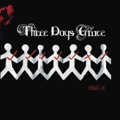
Can You Feel My Heart
Bring Me The Horizon · 2004 - 2013
A raw cry for rescue that never finds an answer within the song itself.
Where the words land
Signal: Worth Weighing, leaning strained.
What do these signals mean?
- Edifying: Points the heart toward God, truth, hope, or love.
- Worth Weighing: Real good and real concern together. Test it before you take it in.
- Strained: Strains against Scripture: leans toward what could dull or mislead.
- At Odds: At odds with Scripture: celebrates what it warns against. Little here builds up.
Weighed against Scripture
“Can you fix the broken?”
“The LORD is near to the brokenhearted; He saves the contrite in spirit.”
The cry to be fixed mirrors the psalmist's confidence that God draws near to the brokenhearted, though the song itself only asks the question without answering it.
“Can you save my b*****d soul?”
“What a wretched man I am! Who will rescue me from this body of death?”
Paul's anguished 'who will deliver me' is the same posture: a soul aware of its own wreckage, crying out for rescue it cannot provide itself.
“Forgive me, father, I love you, mother”
I will get up and go back to my father and say to him, “Father, I have sinned against heaven and against you.
Like the prodigal rehearsing his confession, this line turns toward a father figure in search of forgiveness rather than away from it.
The song as a whole
“For I do not do the good I want to do. Instead, I keep on doing the evil I do not want to do.”
The helplessness against a recurring, unwanted pattern of self-destruction echoes Paul's own description of doing the evil he does not want to do.
“How long, O LORD? Will You forget me forever? How long will You hide Your face from me? How long must I wrestle in my soul, with sorrow in my heart each day? How long will my enemy dominate me?”
The whole song is structured as an unanswered cry ('how long,' 'can you'), the same raw, unresolved address to someone who might be listening that opens this psalm.
Words of Christ are set in red.
In short
This is a confession dressed as a question: can anyone actually fix me, hear me, save me? It doesn't resolve into comfort, it just keeps asking, verse after verse, while naming real struggles with isolation, numbing, and self-destructive cycles. The honesty is real, but so is the unresolved weight it leaves hanging.
- Lyrical content
No explicit language; imagery of darkness, fear, and addiction-like struggle, but nothing graphic or glorifying.
- Spiritual posture
The song begs for rescue and forgiveness, naming brokenness and asking if anyone can reach it. It doesn't arrive at hope, but it reaches toward being known and saved.
- Apparent intent
Oliver Sykes has described this as deeply personal, written out of real anxiety and self-destructive patterns. It reads as confession, not celebration.
What do these ratings mean?
- Lyrical content, what the words say on the surface. Clean: nothing coarse, sexual or violent. Mild: a trace of it, by allusion or a rare word. Strong: profanity, sex or violence in plain words. Explicit: graphic, or sin held up to admire.
- Spiritual posture, where the song's heart points. God-honoring: toward God, truth or hope. Searching: honestly reaching or wrestling toward truth, without arriving. Neutral: spiritually indifferent; neither reaches nor rejects. Dark: despairing, nihilistic, self-exalting or hostile to God.
- Apparent intent, what the song is for. Edifying: worship, encouragement, honest lament. Cathartic: letting grief, anger or longing out, told honestly. Ambiguous: hard to say what the song is for. Harmful: celebrates evil, mocks faith or draws toward sin.
Does this song's honest ache for rescue draw you toward seeking someone who can actually answer it, or does it leave you sitting in the question alone?
An AI-assisted reading. It can misread a lyric, a metaphor or a song’s intent.