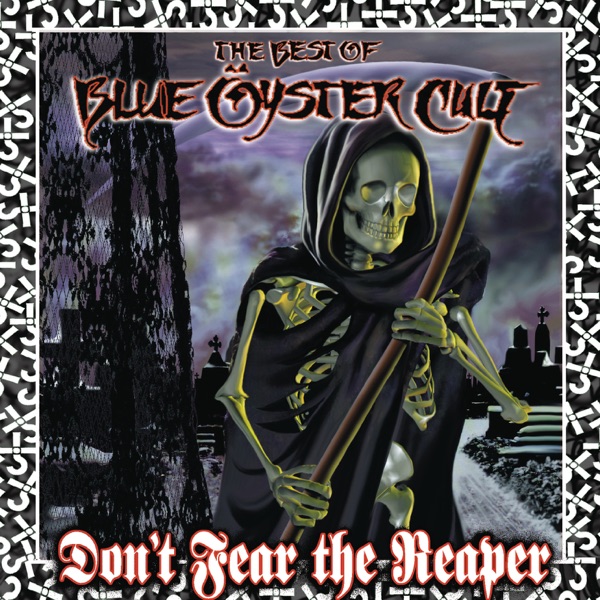
(Don't Fear) The Reaper
Blue Öyster Cult · Don't Fear the Reaper: The Best of Blue Öyster Cult
Death sung as a gentle lover, with no hope answering the invitation.
Where the words land
Signal: Strained, leaning at odds.
What do these signals mean?
- Edifying: Points the heart toward God, truth, hope, or love.
- Worth Weighing: Real good and real concern together. Test it before you take it in.
- Strained: Strains against Scripture: leans toward what could dull or mislead.
- At Odds: At odds with Scripture: celebrates what it warns against. Little here builds up.
Weighed against Scripture
“Seasons don't fear the reaper”
“To everything there is a season, and a time for every purpose under heaven: a time to be born and a time to die, a time to plant and a time to uproot,”
Scripture acknowledges a time to die as part of life's rhythm, but never asks us to stop fearing death or to see it as neutral like changing seasons.
“Then the door was open, and the wind appeared”
“The thief comes only to steal and kill and destroy. I have come that they may have life, and have it in all its fullness.”
Jesus describes the thief who comes to steal and kill against his own purpose to give abundant life; this scene depicts death's visitor as gentle and desirable rather than an intruder to resist.
“She had become like they are”
“Even though I walk through the valley of the shadow of death, I will fear no evil, for You are with me; Your rod and Your staff, they comfort me.”
David walks through death's shadow trusting God's presence and rod and staff for comfort, not by surrendering to death as a lover calling him home.
The song as a whole
“Where, O Death, is your victory? Where, O Death, is your sting?” The sting of death is sin, and the power of sin is the law.
Paul taunts death's sting through resurrection hope in Christ, not through romanticizing two young lovers' tragic deaths as a model to follow.
Words of Christ are set in red.
In short
Beneath the gentle guitar line and soft harmonies is a song that turns death into a seductive, almost romantic figure, something to take your hand and fly away with rather than something to grieve or resist. The Romeo and Juliet references and the closing scene strongly evoke a death pact, dressed in dreamy imagery instead of dread. Whatever the band's stated intent about overcoming mortal fear, the song offers no counterweight of hope, resurrection, or reason to stay, only invitation.
- Lyrical content
No profanity or explicit content, but the imagery romanticizes death as a lover's embrace, including a scene that reads as a joint suicide or death pact.
- Spiritual posture
Death is reframed as natural and desirable, something to not fear but welcome, with no acknowledgment of grief, judgment, or hope beyond the grave.
- Apparent intent
The songwriter has said it was meant as a statement against the fear of mortality, not an endorsement of suicide, but the dreamy, seductive framing blurs that line badly.
What do these ratings mean?
- Lyrical content, what the words say on the surface. Clean: nothing coarse, sexual or violent. Mild: a trace of it, by allusion or a rare word. Strong: profanity, sex or violence in plain words. Explicit: graphic, or sin held up to admire.
- Spiritual posture, where the song's heart points. God-honoring: toward God, truth or hope. Searching: honestly reaching or wrestling toward truth, without arriving. Neutral: spiritually indifferent; neither reaches nor rejects. Dark: despairing, nihilistic, self-exalting or hostile to God.
- Apparent intent, what the song is for. Edifying: worship, encouragement, honest lament. Cathartic: letting grief, anger or longing out, told honestly. Ambiguous: hard to say what the song is for. Harmful: celebrates evil, mocks faith or draws toward sin.
Does this song's dreamy embrace of death leave room for the kind of hope that doesn't require surrendering to it?
An AI-assisted reading. It can misread a lyric, a metaphor or a song’s intent.