Don't Let Go (Love)
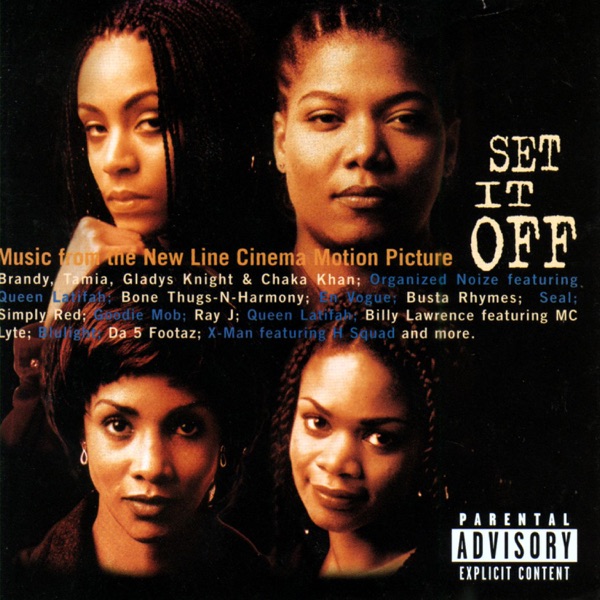
En Vogue · Set It Off (Music From The New Line Cinema Motion Picture)
Passionate longing for love and commitment, caught between patience and desire.
Where the words land
Signal: Worth Weighing, leaning edifying.
What do these signals mean?
- Edifying: Points the heart toward God, truth, hope, or love.
- Worth Weighing: Real good and real concern together. Test it before you take it in.
- Strained: Strains against Scripture: leans toward what could dull or mislead.
- At Odds: At odds with Scripture: celebrates what it warns against. Little here builds up.
Weighed against Scripture
“I won't be satisfied 'til we're taking those vows”
“Set me as a seal over your heart, as a seal upon your arm. For love is as strong as death, its jealousy as unrelenting as Sheol. Its sparks are fiery flames, the fiercest blaze of all. Mighty waters cannot quench love; rivers cannot sweep it away. If a man were to give all the wealth of his house for love, his offer would be utterly scorned.”
The longing for committed, vow-bound love mirrors Scripture's own celebration of passionate romantic love within covenant.
“Hold me tight and don't let go”
“For this reason a man will leave his father and mother and be united to his wife, and they will become one flesh.”
The desire for permanent union and not letting go reflects the created longing for a lasting, one-flesh bond.
“You have the right to lose control”
“The husband should fulfill his marital duty to his wife, and likewise the wife to her husband. The wife does not have authority over her own body, but the husband. Likewise the husband does not have authority over his own body, but the wife. Do not deprive each other, except by mutual consent and for a time, so you may devote yourselves to prayer. Then come together again, so that Satan will not tempt you through your lack of self-control.”
Scripture frames sexual desire as rightly expressed within marriage; the song's eagerness to 'lose control' outside that context stands in tension with this mutual, covenanted intimacy.
In short
This is a classic R&B love song about aching, unresolved desire, wanting a friendship to become something deeper and permanent. It's emotionally honest but focused purely on romantic longing, not on any larger spiritual frame. The tension between wanting commitment ('taking those vows') and wanting to 'lose control' now reflects a common real-life pull between patience and desire.
- Lyrical content
Romantic and sensual longing with suggestive phrases like 'lovemaking' and 'lose control,' but no explicit or crude language.
- Spiritual posture
The song is focused entirely on romantic desire and commitment, with no reach toward or away from God; it sits in the realm of human longing.
- Apparent intent
Written as an expression of passionate, vulnerable love and desire for commitment, aiming to capture romantic intensity rather than to harm or mislead.
What do these ratings mean?
- Lyrical content, what the words say on the surface. Clean: nothing coarse, sexual or violent. Mild: a trace of it, by allusion or a rare word. Strong: profanity, sex or violence in plain words. Explicit: graphic, or sin held up to admire.
- Spiritual posture, where the song's heart points. God-honoring: toward God, truth or hope. Searching: honestly reaching or wrestling toward truth, without arriving. Neutral: spiritually indifferent; neither reaches nor rejects. Dark: despairing, nihilistic, self-exalting or hostile to God.
- Apparent intent, what the song is for. Edifying: worship, encouragement, honest lament. Cathartic: letting grief, anger or longing out, told honestly. Ambiguous: hard to say what the song is for. Harmful: celebrates evil, mocks faith or draws toward sin.
Does this song's portrayal of desire point you toward patient, committed love, or toward urgency that outruns it?
An AI-assisted reading. It can misread a lyric, a metaphor or a song’s intent.



