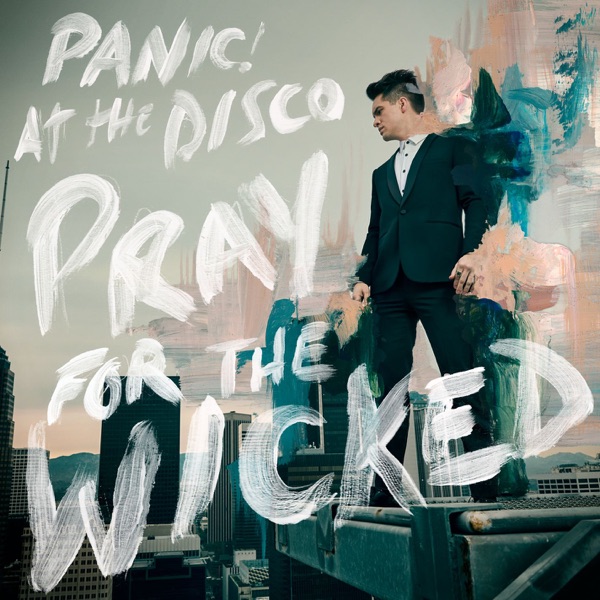
Hey Look Ma, I Made It
Panic! At the Disco · Pray for the Wicked
A glittering boast about fame that worships itself, half-aware of the emptiness.
Where the words land
Signal: Strained, leaning worth weighing.
What do these signals mean?
- Edifying: Points the heart toward God, truth, hope, or love.
- Worth Weighing: Real good and real concern together. Test it before you take it in.
- Strained: Strains against Scripture: leans toward what could dull or mislead.
- At Odds: At odds with Scripture: celebrates what it warns against. Little here builds up.
Weighed against Scripture
“my pimp's a record label”
“No one can serve two masters: Either he will hate the one and love the other, or he will be devoted to the one and despise the other. You cannot serve both God and money.”
The song frames the self as sold to industry and ambition, the very divided service Jesus warns can't coexist with serving God.
The song as a whole
“Pride goes before destruction, and a haughty spirit before a fall.”
The boast of being 'the greatest' amid acknowledged evil is the exact pride Scripture warns precedes a fall.
“And when you pray, do not be like the hypocrites. For they love to pray standing in the synagogues and on the street corners to be seen by men. Truly I tell you, they already have their full reward.”
Prayer performed as spectacle in a self-built 'cathedral' of fame mirrors the hollow, self-glorifying prayer Jesus critiques.
“Two are better than one, because they have a good return for their labor. For if one falls down, his companion can lift him up; but pity the one who falls without another to help him up!”
The isolation the song admits, surrounded by 'phonies' and rivals, echoes the wisdom that isolation without real companionship is its own kind of poverty.
Come now, you who say, “Today or tomorrow we will go to this or that city, spend a year there, carry on business, and make a profit.” You do not even know what will happen tomorrow! What is your life? You are a mist that appears for a little while and then vanishes. Instead, you ought to say, “If the Lord is willing, we will live and do this or that.” As it is, you boast in your proud intentions. All such boasting is evil.
The whole song's triumphant 'I made it' boast, with no reference beyond self, stands against the caution to hold plans and success loosely before God.
Words of Christ are set in red.
In short
This is a satirical strut through fame's excess, ambition recast as religion, with the singer both preening and quietly aware of the cost. It names real things, like phony friends and lonely distrust, but never looks past the self for meaning. The glitter is the point, and so is the hollowness underneath it.
- Lyrical content
No explicit profanity, but blunt imagery of self-commodification ('hooker sellin' songs') and ambition dressed as conquest.
- Spiritual posture
The song dresses success as a religion of self: a 'golden cathedral' built to the singer's own ego, with faith directed inward rather than upward.
- Apparent intent
Brendon Urie has described this as satire of fame and industry excess; it's less a celebration than a wry, self-aware confession of ambition's cost.
What do these ratings mean?
- Lyrical content, what the words say on the surface. Clean: nothing coarse, sexual or violent. Mild: a trace of it, by allusion or a rare word. Strong: profanity, sex or violence in plain words. Explicit: graphic, or sin held up to admire.
- Spiritual posture, where the song's heart points. God-honoring: toward God, truth or hope. Searching: honestly reaching or wrestling toward truth, without arriving. Neutral: spiritually indifferent; neither reaches nor rejects. Dark: despairing, nihilistic, self-exalting or hostile to God.
- Apparent intent, what the song is for. Edifying: worship, encouragement, honest lament. Cathartic: letting grief, anger or longing out, told honestly. Ambiguous: hard to say what the song is for. Harmful: celebrates evil, mocks faith or draws toward sin.
Does this song's swagger leave room for anything bigger than the self, or does ambition quietly become the whole story?
An AI-assisted reading. It can misread a lyric, a metaphor or a song’s intent.


