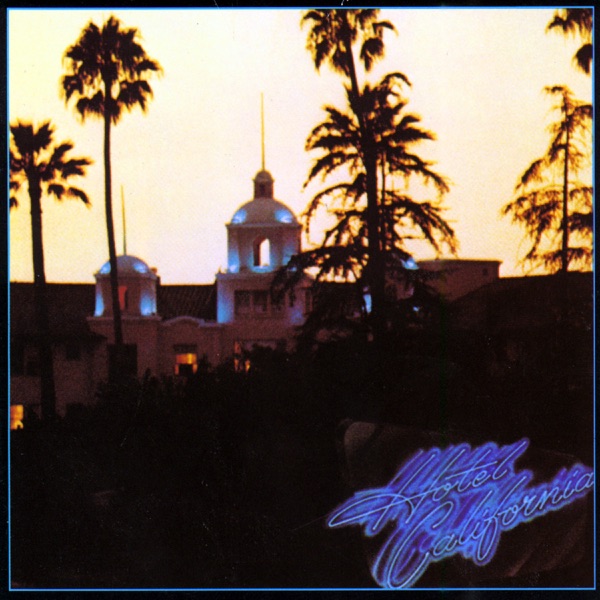
Hotel California
Eagles · Hotel California
A glittering trap: luxury and pleasure that curdle into captivity.
Where the words land
Signal: Worth Weighing, leaning strained.
What do these signals mean?
- Edifying: Points the heart toward God, truth, hope, or love.
- Worth Weighing: Real good and real concern together. Test it before you take it in.
- Strained: Strains against Scripture: leans toward what could dull or mislead.
- At Odds: At odds with Scripture: celebrates what it warns against. Little here builds up.
Weighed against Scripture
“This could be Heaven or this could be Hell”
“Enter through the narrow gate. For wide is the gate and broad is the way that leads to destruction, and many enter through it. But small is the gate and narrow the way that leads to life, and only a few find it.”
The narrator's confusion between a wide, inviting gate and a destructive one mirrors Jesus' warning that the easy road often leads to ruin.
“We are all just prisoners here, of our own device”
“Do you not know that when you offer yourselves as obedient slaves, you are slaves to the one you obey, whether you are slaves to sin leading to death, or to obedience leading to righteousness?”
The line names the self-made slavery of sin and indulgence, exactly the dynamic Paul describes: we become servants to whatever we yield ourselves to.
The song as a whole
I said to myself, “Come now, I will test you with pleasure; enjoy what is good!” But it proved to be futile. I said of laughter, “It is folly,” and of pleasure, “What does it accomplish?” I sought to cheer my body with wine and to embrace folly— my mind still guiding me with wisdom— until I could see what was worthwhile for men to do under heaven during the few days of their lives.
Like the Preacher's pursuit of pleasure to numb or distract, the dancers here seek escape rather than meaning.
“The iniquities of a wicked man entrap him; the cords of his sin entangle him. He dies for lack of discipline, led astray by his own great folly.”
The final trap echoes the proverb's warning that the wicked are held fast by the cords of their own sin, a snare that closes without their noticing.
Words of Christ are set in red.
In short
This is less a story than a parable: a glittering world of wealth, pleasure, and escape that reveals itself as an inescapable trap. The song never moralizes, it just lets the horror surface slowly, from 'lovely place' to 'you can never leave.' It's a mirror held up to self-indulgence, not an invitation into it.
- Lyrical content
No profanity; surreal, atmospheric imagery of excess, luxury, and vague sensuality rather than explicit content.
- Spiritual posture
The song traps its narrator in a gilded cage of hedonism and self-deception, with no escape offered, a world that looks like heaven but functions like hell.
- Apparent intent
Widely understood as a critique of 1970s excess and the music industry itself: a cautionary allegory rather than a celebration of the lifestyle it depicts.
What do these ratings mean?
- Lyrical content, what the words say on the surface. Clean: nothing coarse, sexual or violent. Mild: a trace of it, by allusion or a rare word. Strong: profanity, sex or violence in plain words. Explicit: graphic, or sin held up to admire.
- Spiritual posture, where the song's heart points. God-honoring: toward God, truth or hope. Searching: honestly reaching or wrestling toward truth, without arriving. Neutral: spiritually indifferent; neither reaches nor rejects. Dark: despairing, nihilistic, self-exalting or hostile to God.
- Apparent intent, what the song is for. Edifying: worship, encouragement, honest lament. Cathartic: letting grief, anger or longing out, told honestly. Ambiguous: hard to say what the song is for. Harmful: celebrates evil, mocks faith or draws toward sin.
Does this song's portrait of gilded emptiness make you examine what comforts might be quietly holding you captive?
An AI-assisted reading. It can misread a lyric, a metaphor or a song’s intent.


