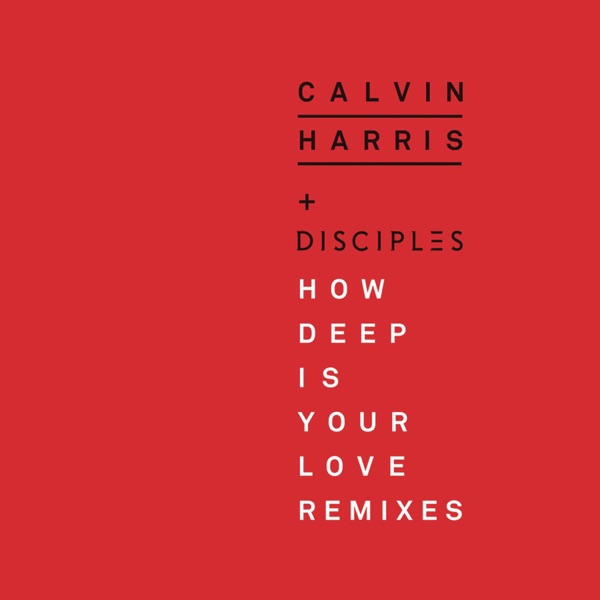
How Deep Is Your Love (Chris Lake Remix)
Calvin Harris & Disciples · How Deep Is Your Love (Remixes) - EP
Euphoric desire for closeness that never reaches beyond the physical.
Where the words land
Signal: Strained, leaning worth weighing.
What do these signals mean?
- Edifying: Points the heart toward God, truth, hope, or love.
- Worth Weighing: Real good and real concern together. Test it before you take it in.
- Strained: Strains against Scripture: leans toward what could dull or mislead.
- At Odds: At odds with Scripture: celebrates what it warns against. Little here builds up.
Weighed against Scripture
“Let me roam your body freely”
“How fair and pleasant you are, O love, with your delights! Your stature is like a palm tree; your breasts are clusters of fruit.”
Physical desire and delight in a lover's body is itself biblical poetry; the ache here isn't foreign to Scripture's own love language.
“No inhibition, no sin”
“Flee from sexual immorality. Every other sin a man can commit is outside his body, but he who sins sexually sins against his own body. Do you not know that your body is a temple of the Holy Spirit who is in you, whom you have received from God? You are not your own; you were bought at a price. Therefore glorify God with your body.”
Casually waving off the category of sin in physical union sits against Scripture's view that bodies and intimacy carry real moral weight.
The song as a whole
“O LORD, You have searched me and known me. You know when I sit and when I rise; You understand my thoughts from afar. You search out my path and my lying down; You are aware of all my ways. Even before a word is on my tongue, You know all about it, O LORD.”
The song looks to a human lover to define identity, while the Psalm locates true self-knowledge in being fully known by God.
“Anything my eyes desired, I did not deny myself. I refused my heart no pleasure. For my heart took delight in all my work, and this was the reward for all my labor. Yet when I considered all the works that my hands had accomplished and what I had toiled to achieve, I found everything to be futile, a pursuit of the wind; there was nothing to be gained under the sun.”
The song's endless escalating chase ('can it go deeper') echoes Qoheleth's pursuit of pleasure that ultimately leaves him empty.
In short
This is a euphoric club track about total romantic and physical surrender, asking a lover to erase fear, inhibition, and even the idea of sin. It's not malicious or despairing, just singularly focused on intensity and sensation as the point of connection. There's real beauty in longing for closeness, but the song never looks past the body for what satisfies it.
- Lyrical content
Sensual and physical language about surrender to a lover, no explicit profanity or graphic description, but charged with bodily longing.
- Spiritual posture
The song searches for identity and transcendence ('tell me who I am') through romantic/physical intensity rather than anything beyond itself.
- Apparent intent
A dance-pop anthem built for euphoric release on the floor, channeling desire and abandon rather than any larger message.
What do these ratings mean?
- Lyrical content, what the words say on the surface. Clean: nothing coarse, sexual or violent. Mild: a trace of it, by allusion or a rare word. Strong: profanity, sex or violence in plain words. Explicit: graphic, or sin held up to admire.
- Spiritual posture, where the song's heart points. God-honoring: toward God, truth or hope. Searching: honestly reaching or wrestling toward truth, without arriving. Neutral: spiritually indifferent; neither reaches nor rejects. Dark: despairing, nihilistic, self-exalting or hostile to God.
- Apparent intent, what the song is for. Edifying: worship, encouragement, honest lament. Cathartic: letting grief, anger or longing out, told honestly. Ambiguous: hard to say what the song is for. Harmful: celebrates evil, mocks faith or draws toward sin.
Does this song's vision of being fully known satisfy the deeper longing it's naming, or just intensify it?
An AI-assisted reading. It can misread a lyric, a metaphor or a song’s intent.


