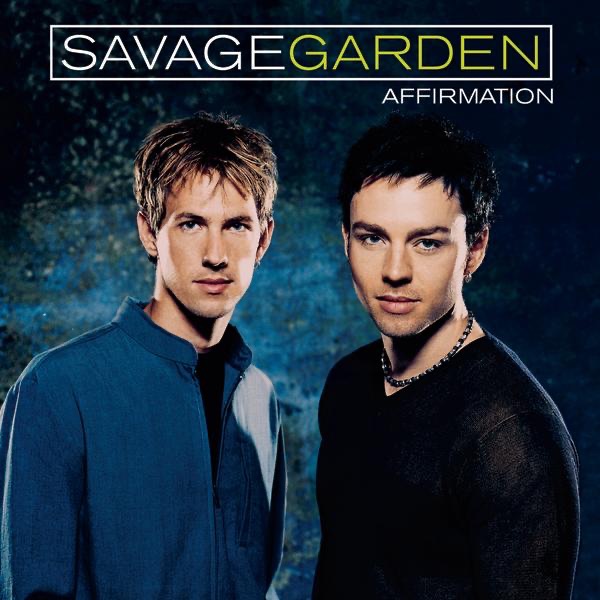
I Knew I Loved You
Savage Garden · Affirmation
A sweet love song that quietly asks romance to be ultimate meaning.
Where the words land
Signal: Edifying, leaning worth weighing.
What do these signals mean?
- Edifying: Points the heart toward God, truth, hope, or love.
- Worth Weighing: Real good and real concern together. Test it before you take it in.
- Strained: Strains against Scripture: leans toward what could dull or mislead.
- At Odds: At odds with Scripture: celebrates what it warns against. Little here builds up.
Weighed against Scripture
“I'm searching for, I think I've found my way home”
The LORD God also said, “It is not good for the man to be alone. I will make for him a suitable helper.” And out of the ground the LORD God formed every beast of the field and every bird of the air, and He brought them to the man to see what he would name each one. And whatever the man called each living creature, that was its name. The man gave names to all the livestock, to the birds of the air, and to every beast of the field. But for Adam no suitable helper was found. So the LORD God caused the man to fall into a deep sleep, and while he slept, He took one of the man’s ribs and closed up the area with flesh. And from the rib that the LORD God had taken from the man, He made a woman and brought her to him. And the man said: “This is now bone of my bones and flesh of my flesh; she shall be called ‘woman,’ for out of man she was taken.” For this reason a man will leave his father and mother and be united to his wife, and they will become one flesh.
The ache for a companion who completes us and feels like home reflects the created longing described when God made a helper for Adam.
“I am complete now that I've found you”
“For in Christ all the fullness of the Deity dwells in bodily form. And you have been made complete in Christ, who is the head over every ruler and authority.”
Scripture locates true completeness in Christ; placing that weight on a human relationship is a sweet but fragile substitute.
The song as a whole
“Delight yourself in the LORD, and He will give you the desires of your heart.”
The wonder of having one's deepest desires met mirrors the joy of a heart delighting in what it's given, even if the song doesn't trace it back to the Giver.
In short
This is a joyful, sincere love song about the wonder of finding a soulmate, full of warmth and no dark undertones. Its only real tension is theological: it quietly treats romantic love as the source of ultimate completion, a longing Scripture says points further, toward God himself. There's nothing harmful here, just a human love elevated to near-ultimate meaning.
- Spiritual posture
The song locates ultimate completion and meaning in a romantic partner rather than anything transcendent, but it isn't hostile or despairing, just earthbound.
- Apparent intent
Written as a sincere expression of romantic wonder and gratitude for finding a partner; it's a celebration, not a manipulation.
What do these ratings mean?
- Lyrical content, what the words say on the surface. Clean: nothing coarse, sexual or violent. Mild: a trace of it, by allusion or a rare word. Strong: profanity, sex or violence in plain words. Explicit: graphic, or sin held up to admire.
- Spiritual posture, where the song's heart points. God-honoring: toward God, truth or hope. Searching: honestly reaching or wrestling toward truth, without arriving. Neutral: spiritually indifferent; neither reaches nor rejects. Dark: despairing, nihilistic, self-exalting or hostile to God.
- Apparent intent, what the song is for. Edifying: worship, encouragement, honest lament. Cathartic: letting grief, anger or longing out, told honestly. Ambiguous: hard to say what the song is for. Harmful: celebrates evil, mocks faith or draws toward sin.
Can you enjoy this song's wonder at love while remembering the deeper completion it's echoing?
An AI-assisted reading. It can misread a lyric, a metaphor or a song’s intent.


