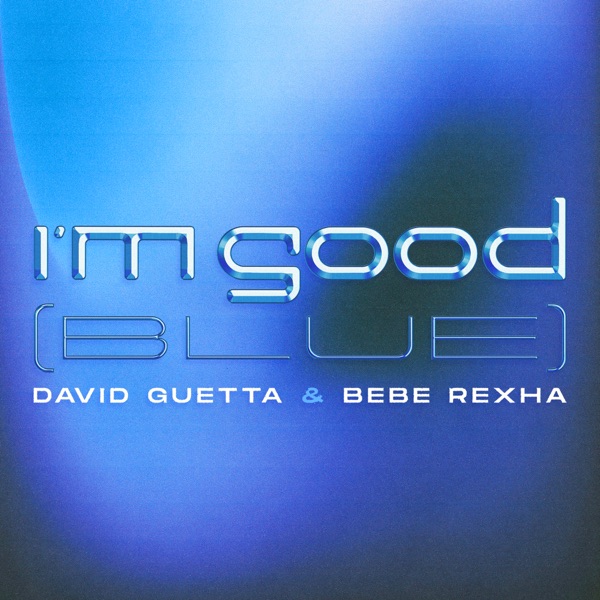
I'm Good (Blue)
David Guetta & Bebe Rexha · I'm Good (Blue) - Single
A harmless party anthem whose good feeling never looks past the night.
Where the words land
Signal: Edifying, leaning worth weighing.
What do these signals mean?
- Edifying: Points the heart toward God, truth, hope, or love.
- Worth Weighing: Real good and real concern together. Test it before you take it in.
- Strained: Strains against Scripture: leans toward what could dull or mislead.
- At Odds: At odds with Scripture: celebrates what it warns against. Little here builds up.
Weighed against Scripture
“I don't need the finer things in life”
“I am not saying this out of need, for I have learned to be content regardless of my circumstances. I know how to live humbly, and I know how to abound. In any and every situation I have learned the secret of being filled and being hungry, of having plenty and having need.”
The lyric's claim to be content without luxury faintly echoes Paul's learned contentment, though here it's about a party rather than a settled inner peace.
“No, I don't care no more, care no more”
“Nothing is better for a man than to eat and drink and enjoy his work. I have also seen that this is from the hand of God. For apart from Him, who can eat and who can find enjoyment?”
Ecclesiastes commends enjoying life's pleasures as a gift from God with awareness, while this line leans toward checking out entirely rather than grounded enjoyment.
The song as a whole
“So whether you eat or drink or whatever you do, do it all to the glory of God.”
The song's whole posture centers pleasure and the moment itself as the point, with nothing beyond the night in view, where Scripture points even ordinary enjoyment toward a larger purpose.
In short
This is a straightforward dance-pop anthem about letting go and enjoying a night out, with an appealing thread of contentment that doesn't need status or VIP treatment. There's no darkness or harm here, but also not much depth: the good feeling is entirely tied to the moment and the music, not to anything that outlasts the night. It's the kind of song that's exactly what it appears to be on the surface.
- Spiritual posture
The song is contentment-adjacent (not needing VIP or 'finer things') but the contentment is tied entirely to a night out, not to anything deeper or lasting.
- Apparent intent
Built purely for the dancefloor: a feel-good, let-loose anthem meant to release stress and invite abandon for a night, nothing more.
What do these ratings mean?
- Lyrical content, what the words say on the surface. Clean: nothing coarse, sexual or violent. Mild: a trace of it, by allusion or a rare word. Strong: profanity, sex or violence in plain words. Explicit: graphic, or sin held up to admire.
- Spiritual posture, where the song's heart points. God-honoring: toward God, truth or hope. Searching: honestly reaching or wrestling toward truth, without arriving. Neutral: spiritually indifferent; neither reaches nor rejects. Dark: despairing, nihilistic, self-exalting or hostile to God.
- Apparent intent, what the song is for. Edifying: worship, encouragement, honest lament. Cathartic: letting grief, anger or longing out, told honestly. Ambiguous: hard to say what the song is for. Harmful: celebrates evil, mocks faith or draws toward sin.
Does this song's fleeting good feeling point you toward anything lasting, or is it just enjoyed for what it is?
An AI-assisted reading. It can misread a lyric, a metaphor or a song’s intent.


