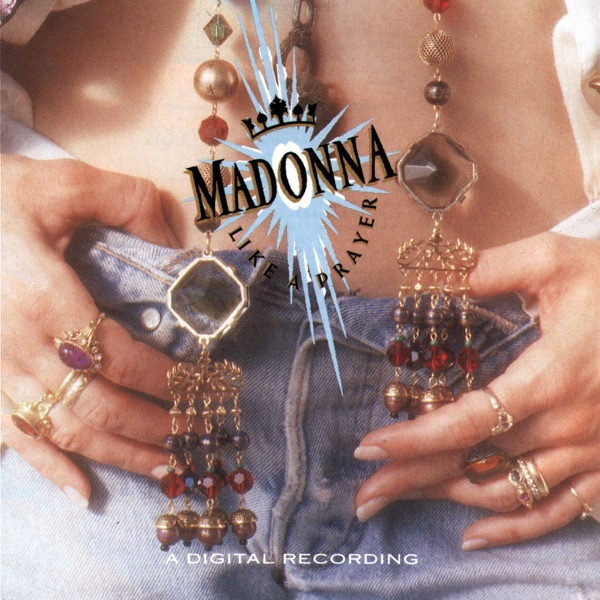
Like a Prayer
Madonna · Like a Prayer
Prayer language borrowed for romantic ecstasy, not actual worship.
Where the words land
Signal: Strained, leaning worth weighing.
What do these signals mean?
- Edifying: Points the heart toward God, truth, hope, or love.
- Worth Weighing: Real good and real concern together. Test it before you take it in.
- Strained: Strains against Scripture: leans toward what could dull or mislead.
- At Odds: At odds with Scripture: celebrates what it warns against. Little here builds up.
Weighed against Scripture
“When you call my name it's like a little prayer”
“So then, this is how you should pray: ‘Our Father in heaven, hallowed be Your name.”
Jesus teaches prayer as address to the Father; here the language of prayer is redirected toward a human lover, blurring who is actually being worshiped.
“I'm down on my knees, I wanna take you there”
“You shall have no other gods before Me. You shall not make for yourself an idol in the form of anything in the heavens above, on the earth below, or in the waters beneath. You shall not bow down to them or worship them; for I, the LORD your God, am a jealous God, visiting the iniquity of the fathers on their children to the third and fourth generations of those who hate Me,”
Kneeling, the posture of worship, is here given to romantic/sexual longing instead of God, echoing the pattern of misplaced devotion.
“I hear your voice, it's like an angel sighin”
“And no wonder, for Satan himself masquerades as an angel of light.”
The song equates a lover's voice with angelic, almost divine, revelation, the kind of conflation Scripture warns can disguise deception as light.
The song as a whole
“Futility of futilities,” says the Teacher, “futility of futilities! Everything is futile!”
An honest admission of life's bewildering solitude and mystery, similar to the Preacher's wrestling with meaning.
“In God alone my soul finds rest; my salvation comes from Him. He alone is my rock and my salvation. He is my fortress; I will never be shaken.”
The song's longing for rest and rescue is placed in a human relationship rather than in God, where the Psalmist locates his only true refuge.
Words of Christ are set in red.
In short
Madonna borrows the vocabulary of worship, prayer, kneeling, angels, power, to describe erotic and romantic longing. It's a sensory, euphoric song that plays in the space between the sacred and the sensual, intentionally blurring whether the devotion is toward God or toward a lover. Musically and emotionally it's compelling, but spiritually it repurposes the language of true worship for something else.
- Lyrical content
Surface language is clean, but the imagery deliberately fuses devotional and erotic vocabulary (kneeling, prayer, 'power,' 'midnight hour').
- Spiritual posture
Religious imagery is used as metaphor for romantic/sexual surrender rather than genuine worship; the 'prayer' is addressed to a lover, not God.
- Apparent intent
Madonna has described the song as about faith and desire intertwined; the intent reads as deliberately provocative blending of sacred and sensual rather than either worship or mockery.
What do these ratings mean?
- Lyrical content, what the words say on the surface. Clean: nothing coarse, sexual or violent. Mild: a trace of it, by allusion or a rare word. Strong: profanity, sex or violence in plain words. Explicit: graphic, or sin held up to admire.
- Spiritual posture, where the song's heart points. God-honoring: toward God, truth or hope. Searching: honestly reaching or wrestling toward truth, without arriving. Neutral: spiritually indifferent; neither reaches nor rejects. Dark: despairing, nihilistic, self-exalting or hostile to God.
- Apparent intent, what the song is for. Edifying: worship, encouragement, honest lament. Cathartic: letting grief, anger or longing out, told honestly. Ambiguous: hard to say what the song is for. Harmful: celebrates evil, mocks faith or draws toward sin.
When the song borrows the words of prayer, who is actually being worshiped in your own listening?
An AI-assisted reading. It can misread a lyric, a metaphor or a song’s intent.


