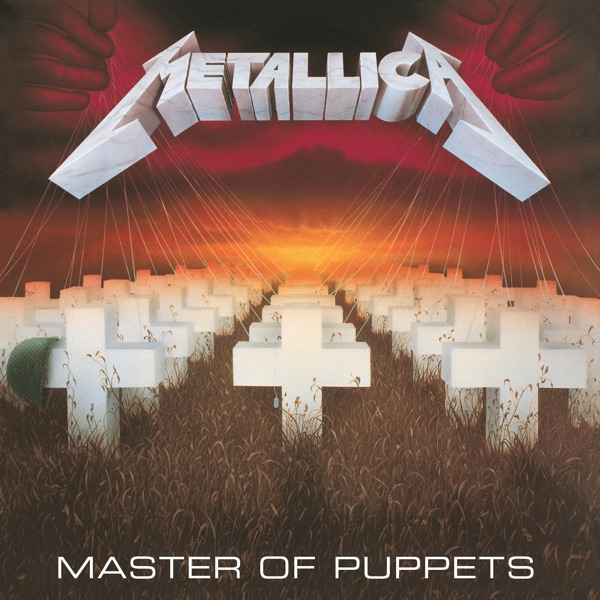
Master of Puppets
Metallica · Master of Puppets (Deluxe Box Set)
Addiction given a voice to gloat, with no rescue in sight.
Where the words land
Signal: Strained, leaning worth weighing.
What do these signals mean?
- Edifying: Points the heart toward God, truth, hope, or love.
- Worth Weighing: Real good and real concern together. Test it before you take it in.
- Strained: Strains against Scripture: leans toward what could dull or mislead.
- At Odds: At odds with Scripture: celebrates what it warns against. Little here builds up.
Weighed against Scripture
“I'm your source of self-destruction”
“Do you not know that when you offer yourselves as obedient slaves, you are slaves to the one you obey, whether you are slaves to sin leading to death, or to obedience leading to righteousness?”
Paul warns that whatever masters you, you become its slave; the song's 'master' is a chilling picture of that bondage to sin and death.
“Obey your master, master”
Jesus replied, “Truly, truly, I tell you, everyone who sins is a slave to sin.
Jesus names sin itself as a master that enslaves; the song dramatizes exactly this captivity without naming a way out.
“Master, master, you promised only lies”
“You belong to your father, the devil, and you want to carry out his desires. He was a murderer from the beginning, refusing to uphold the truth, because there is no truth in him. When he lies, he speaks his native language, because he is a liar and the father of lies.”
The deceiver's promises collapsing into lies mirrors how addiction's false comfort turns to betrayal and mockery.
“Fix me!”
“I waited patiently for the LORD; He inclined to me and heard my cry. He lifted me up from the pit of despair, out of the miry clay; He set my feet upon a rock, and made my footsteps firm.”
The psalmist cries out and is drawn up from the pit by God; the song's cry for help is met only with laughter, no rescuer appears.
The song as a whole
“What a wretched man I am! Who will rescue me from this body of death?”
The whole song's despairing cry 'who will deliver me from this body of death' is voiced here without Paul's answering hope that follows.
Words of Christ are set in red.
In short
This is a vivid, theatrical portrait of addiction speaking in its own voice, boasting about its total control over a victim's mind, body, and life. The cry for help ('Fix me!') is met only with mocking laughter, and the song ends with the master still ruling, offering no resolution or escape. It's a warning dressed as horror, not a celebration of drug use.
- Lyrical content
Vivid drug-addiction imagery (cutting lines on a mirror, veins, needlework) personified as a controlling master; no explicit profanity but heavy, visceral content.
- Spiritual posture
The song voices addiction itself as a tyrant that enslaves, deceives, and ultimately kills, with the victim crying out and being mocked rather than rescued.
- Apparent intent
Written as a cautionary, almost theatrical warning against addiction's grip, giving voice to the substance's cruelty rather than glamorizing it.
What do these ratings mean?
- Lyrical content, what the words say on the surface. Clean: nothing coarse, sexual or violent. Mild: a trace of it, by allusion or a rare word. Strong: profanity, sex or violence in plain words. Explicit: graphic, or sin held up to admire.
- Spiritual posture, where the song's heart points. God-honoring: toward God, truth or hope. Searching: honestly reaching or wrestling toward truth, without arriving. Neutral: spiritually indifferent; neither reaches nor rejects. Dark: despairing, nihilistic, self-exalting or hostile to God.
- Apparent intent, what the song is for. Edifying: worship, encouragement, honest lament. Cathartic: letting grief, anger or longing out, told honestly. Ambiguous: hard to say what the song is for. Harmful: celebrates evil, mocks faith or draws toward sin.
Does hearing addiction's cruelty named this starkly help you resist it, or does it leave you sitting too long in the hopelessness without anywhere to go?
An AI-assisted reading. It can misread a lyric, a metaphor or a song’s intent.