Mr Wendal
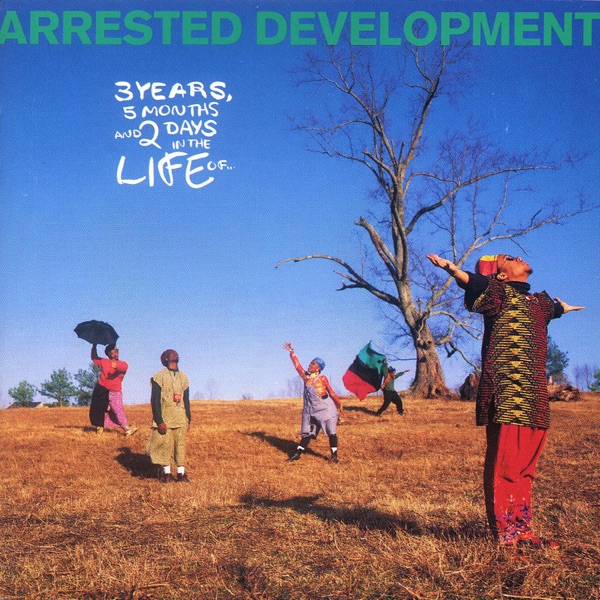
Arrested Development · 3 Years, 5 Months and 2 Days In the Life Of...
A compassionate call to see dignity and God's image in the forgotten.
Where the words land
Signal: Edifying.
What do these signals mean?
- Edifying: Points the heart toward God, truth, hope, or love.
- Worth Weighing: Real good and real concern together. Test it before you take it in.
- Strained: Strains against Scripture: leans toward what could dull or mislead.
- At Odds: At odds with Scripture: celebrates what it warns against. Little here builds up.
Weighed against Scripture
“Be strong, serve God only”
“Away from Me, Satan!” Jesus told him. “For it is written: ‘Worship the Lord your God and serve Him only.’”
The song opens with a call to singular devotion to God, echoing Jesus' own words on worship.
“I saw a man with no clothes, no money, no plate”
“For I was hungry and you gave Me something to eat, I was thirsty and you gave Me something to drink, I was a stranger and you took Me in, I was naked and you clothed Me, I was sick and you looked after Me, I was in prison and you visited Me.’ Then the righteous will answer Him, ‘Lord, when did we see You hungry and feed You, or thirsty and give You something to drink? When did we see You a stranger and take You in, or naked and clothe You? When did we see You sick or in prison and visit You?’ And the King will reply, ‘Truly I tell you, whatever you did for one of the least of these brothers of Mine, you did for Me.’”
Jesus identifies with the hungry, naked, and poor; the song's encounter mirrors this call to see Christ in the marginalized.
“to give him money isn't charity, he gives me some knowledge”
“Kindness to the poor is a loan to the LORD, and He will repay the lender.”
The mutual exchange of dignity reflects the proverb's truth that kindness to the poor is itself a kind of lending to God, not mere charity.
The song as a whole
My brothers, as you hold out your faith in our glorious Lord Jesus Christ, do not show favoritism. Suppose a man comes into your meeting wearing a gold ring and fine clothes, and a poor man in shabby clothes also comes in. If you lavish attention on the man in fine clothes and say, “Here is a seat of honor,” but say to the poor man, “You must stand” or “Sit at my feet,” have you not discriminated among yourselves and become judges with evil thoughts?
James warns against favoritism and judging by appearance, exactly what society does to Mr. Wendal.
“He has shown you, O man, what is good. And what does the LORD require of you but to act justly, to love mercy, and to walk humbly with your God?”
The song's overall call to justice, mercy, and humility toward the poor reflects this prophetic summons.
Words of Christ are set in red.
In short
This song tells the story of a homeless man named Mr. Wendal, using his story to challenge the listener's assumptions about civilization, freedom, and worth. It calls for seeing dignity in people society overlooks, framed with a call to serve God and examine our own hypocrisy. The tone is reflective and compassionate rather than judgmental.
What do these ratings mean?
- Lyrical content, what the words say on the surface. Clean: nothing coarse, sexual or violent. Mild: a trace of it, by allusion or a rare word. Strong: profanity, sex or violence in plain words. Explicit: graphic, or sin held up to admire.
- Spiritual posture, where the song's heart points. God-honoring: toward God, truth or hope. Searching: honestly reaching or wrestling toward truth, without arriving. Neutral: spiritually indifferent; neither reaches nor rejects. Dark: despairing, nihilistic, self-exalting or hostile to God.
- Apparent intent, what the song is for. Edifying: worship, encouragement, honest lament. Cathartic: letting grief, anger or longing out, told honestly. Ambiguous: hard to say what the song is for. Harmful: celebrates evil, mocks faith or draws toward sin.
Who in your own life might you be walking past the way society walks past Mr. Wendal?
An AI-assisted reading. It can misread a lyric, a metaphor or a song’s intent.