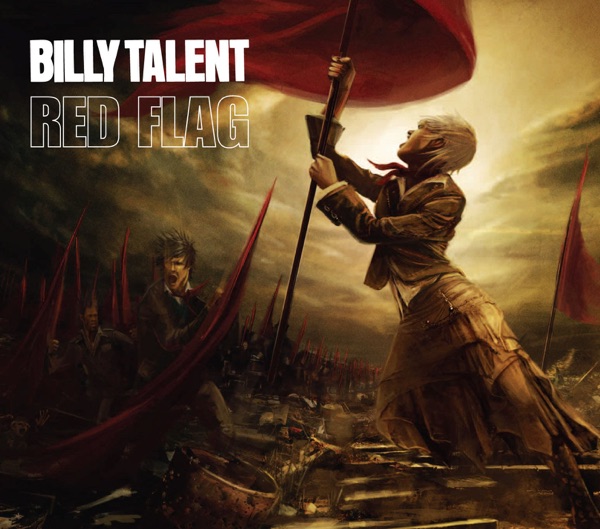
Red Flag
Billy Talent · Red Flag - EP
Defiant call to rebellion that trusts only in youth, not rescue from beyond itself.
Where the words land
Signal: Worth Weighing, leaning strained.
What do these signals mean?
- Edifying: Points the heart toward God, truth, hope, or love.
- Worth Weighing: Real good and real concern together. Test it before you take it in.
- Strained: Strains against Scripture: leans toward what could dull or mislead.
- At Odds: At odds with Scripture: celebrates what it warns against. Little here builds up.
Weighed against Scripture
“Cast off the crutch that kills the pain”
“Put not your trust in princes, in mortal man, who cannot save. When his spirit departs, he returns to the ground; on that very day his plans perish. Blessed is he whose help is the God of Jacob, whose hope is in the LORD his God,”
The song urges casting off reliance on anything outside yourself, while the Psalm points to the blessedness of trusting God rather than human strength alone.
“Our only hope is in minds of kids”
This is what the LORD says: “Cursed is the man who trusts in mankind, who makes mere flesh his strength and turns his heart from the LORD.
Placing ultimate hope in human minds and generational rebellion echoes the very trust in man that this verse warns against.
“Like a riot, don't need order”
“For God is not a God of disorder, but of peace— as in all the churches of the saints.”
Scripture ties God's character to peace and order, while the lyric romanticizes riot and disorder as a virtue.
“Don't be afraid to slip and fall”
“For though a righteous man may fall seven times, he still gets up; but the wicked stumble in bad times.”
The encouragement to keep going despite failure resonates with the proverb's picture of the righteous rising after every fall.
This is a protest anthem aimed at generational apathy and corrupt institutions, urging young people to reject inherited complacency and fight for change themselves. It's energetic and defiant rather than despairing, but its vision of hope is entirely self-generated: no outside rescue, just youthful will and rebellion. The martial imagery (guns, nooses, riots, martyrs) is metaphorical but intense, and the repeated 'we don't need them' leans toward self-sufficiency as the answer to brokenness.
No profanity, but militant imagery of guns, nooses, riots, and martyrdom runs throughout as metaphor for youth rebellion.
The song is political protest energy rather than a spiritual posture toward or away from God; it trusts in self-reliant youth uprising rather than any higher hope.
Billy Talent frames this as a call to political awakening and generational self-determination, using combative metaphor rather than literal violence, but the 'we don't need them' refrain cuts against dependence on anything outside the self.
Where do you place your ultimate hope for change: in human will and rebellion, or in something beyond yourself?
An AI-assisted reading. It can misread a lyric, a metaphor or a song’s intent.


