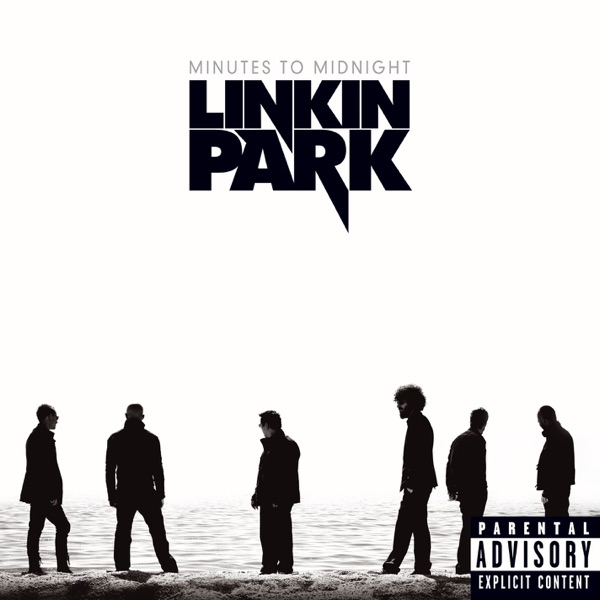
Shadow of the Day
LINKIN PARK · Minutes to Midnight (Deluxe Edition)
An honest, tender elegy for an unavoidable goodbye.
Where the words land
Signal: Edifying, leaning worth weighing.
What do these signals mean?
- Edifying: Points the heart toward God, truth, hope, or love.
- Worth Weighing: Real good and real concern together. Test it before you take it in.
- Strained: Strains against Scripture: leans toward what could dull or mislead.
- At Odds: At odds with Scripture: celebrates what it warns against. Little here builds up.
Weighed against Scripture
“Sometimes goodbye's the only way”
“To everything there is a season, and a time for every purpose under heaven: a time to be born and a time to die, a time to plant and a time to uproot, a time to kill and a time to heal, a time to break down and a time to build, a time to weep and a time to laugh, a time to mourn and a time to dance,”
The song's resignation to necessary endings mirrors the Preacher's acknowledgment that there is a time to lose and a time to mourn.
“Your friends all plead for you to stay”
“You have removed my friends from me; You have made me repulsive to them; I am confined and cannot escape. My eyes grow dim with grief. I call to You daily, O LORD; I spread out my hands to You.”
Like the psalmist surrounded yet isolated in sorrow, this line captures the helplessness of loved ones who cannot change an outcome.
“The shadow of the day will embrace the world in gray”
“Even though I walk through the valley of the shadow of death, I will fear no evil, for You are with me; Your rod and Your staff, they comfort me.”
Where the psalm names a presence walking through the valley's shadow, this song's shadow simply falls and covers everything, with no companion named.
The song as a whole
“In the same way, the Spirit helps us in our weakness. For we do not know how we ought to pray, but the Spirit Himself intercedes for us with groans too deep for words.”
The song's wordless ache over a loss it can't fully explain echoes the kind of groaning too deep for words that Scripture says is still heard.
In short
This is a song about watching someone or something slip away and accepting that some goodbyes can't be avoided. It stays in the grief itself rather than offering resolution, but it's tender and honest rather than bleak or self-destructive. The 'shadow' and 'gray' imagery conveys sorrow, not hopelessness or glamorized despair.
- Spiritual posture
The song sits in grief and finality without naming any hope beyond it, but it doesn't celebrate despair either; it's honest ache over an ending.
- Apparent intent
Written as a meditation on loss and the necessity of letting go, giving listeners language for grief rather than glorifying it.
What do these ratings mean?
- Lyrical content, what the words say on the surface. Clean: nothing coarse, sexual or violent. Mild: a trace of it, by allusion or a rare word. Strong: profanity, sex or violence in plain words. Explicit: graphic, or sin held up to admire.
- Spiritual posture, where the song's heart points. God-honoring: toward God, truth or hope. Searching: honestly reaching or wrestling toward truth, without arriving. Neutral: spiritually indifferent; neither reaches nor rejects. Dark: despairing, nihilistic, self-exalting or hostile to God.
- Apparent intent, what the song is for. Edifying: worship, encouragement, honest lament. Cathartic: letting grief, anger or longing out, told honestly. Ambiguous: hard to say what the song is for. Harmful: celebrates evil, mocks faith or draws toward sin.
Does sitting with this song's grief leave you more able to carry your own losses honestly, or does it linger too long in sorrow for where you are right now?
An AI-assisted reading. It can misread a lyric, a metaphor or a song’s intent.


