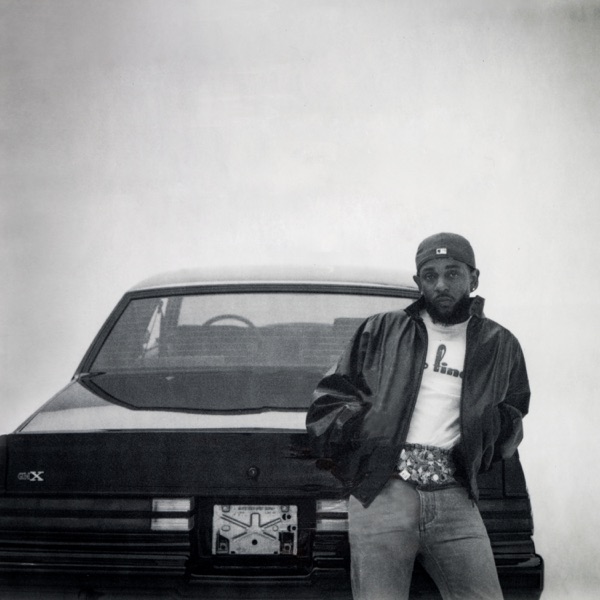
squabble up
Kendrick Lamar · GNX
Swagger and aggression dressed as self-assurance, with little reaching beyond itself.
Where the words land
Signal: At Odds, leaning strained.
What do these signals mean?
- Edifying: Points the heart toward God, truth, hope, or love.
- Worth Weighing: Real good and real concern together. Test it before you take it in.
- Strained: Strains against Scripture: leans toward what could dull or mislead.
- At Odds: At odds with Scripture: celebrates what it warns against. Little here builds up.
Weighed against Scripture
“I got the money and the power both gyratin”
“Those who want to be rich, however, fall into temptation and become ensnared by many foolish and harmful desires that plunge them into ruin and destruction. For the love of money is the root of all kinds of evil. By craving it, some have wandered away from the faith and pierced themselves with many sorrows.”
The song revels in wealth and dominance as the measure of worth, the opposite of the caution Paul gives about money's grip on the heart.
“get the f**k out my face”
“A gentle answer turns away wrath, but a harsh word stirs up anger.”
The repeated hostile dismissal stands against the wisdom of a gentle answer turning away wrath.
“Tell me why the f**k you n****s rap if it's fictional?”
“You brood of vipers, how can you who are evil say anything good? For out of the overflow of the heart the mouth speaks.”
Kendrick's demand for authenticity in rap actually aligns with the principle that words reveal what fills the heart, even as his own words here lean toward aggression.
The song as a whole
“What has been will be again, and what has been done will be done again; there is nothing new under the sun.”
Invoking rebirth and divine awareness while chasing status and conflict shows a hollow nod to the sacred that doesn't shape the song's direction.
“The acts of the flesh are obvious: sexual immorality, impurity, and debauchery; idolatry and sorcery; hatred, discord, jealousy, and rage; rivalries, divisions, factions, and envy; drunkenness, orgies, and the like. I warn you, as I did before, that those who practice such things will not inherit the kingdom of God.”
The song's overall posture of rivalry, sexual dismissiveness, and threats of violence reflects the works of the flesh Paul warns against rather than anything that builds up.
Words of Christ are set in red.
In short
This is Kendrick in full combative mode, flexing wealth, dominance, and street credibility with aggressive, often degrading language. There's a flash of spiritual language at the top, but it doesn't anchor the song; what follows is bravado, threats, and disdain aimed at rivals and women alike. It's skillful and energetic, but spiritually it points inward and downward, toward self-assertion rather than anything redemptive.
- Lyrical content
Heavy profanity, violence, misogynistic language, and braggadocio about money, power, and confrontation run throughout.
- Spiritual posture
Opens with a nod to God but quickly pivots to self-exaltation, dominance, and aggression; no return to humility or dependence on anything beyond self.
- Apparent intent
Functions as a swaggering, combative anthem, channeling Kendrick's competitive and cultural posturing more than a moral statement; meant to provoke energy, not reflection.
What do these ratings mean?
- Lyrical content, what the words say on the surface. Clean: nothing coarse, sexual or violent. Mild: a trace of it, by allusion or a rare word. Strong: profanity, sex or violence in plain words. Explicit: graphic, or sin held up to admire.
- Spiritual posture, where the song's heart points. God-honoring: toward God, truth or hope. Searching: honestly reaching or wrestling toward truth, without arriving. Neutral: spiritually indifferent; neither reaches nor rejects. Dark: despairing, nihilistic, self-exalting or hostile to God.
- Apparent intent, what the song is for. Edifying: worship, encouragement, honest lament. Cathartic: letting grief, anger or longing out, told honestly. Ambiguous: hard to say what the song is for. Harmful: celebrates evil, mocks faith or draws toward sin.
Does this song's energy pull you toward confidence that build others up, or toward contempt and conflict?
An AI-assisted reading. It can misread a lyric, a metaphor or a song’s intent.