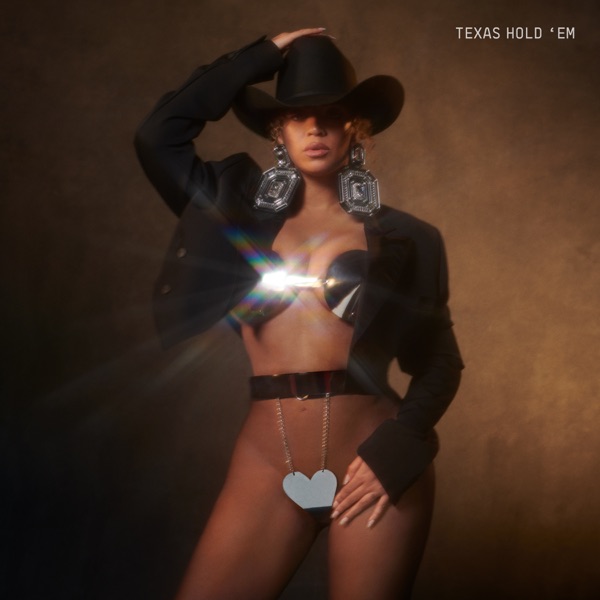
TEXAS HOLD 'EM
Beyoncé · TEXAS HOLD 'EM - Single
A joyful, escapist dance anthem with mild rough edges but no real darkness.
Where the words land
Signal: Edifying, leaning worth weighing.
What do these signals mean?
- Edifying: Points the heart toward God, truth, hope, or love.
- Worth Weighing: Real good and real concern together. Test it before you take it in.
- Strained: Strains against Scripture: leans toward what could dull or mislead.
- At Odds: At odds with Scripture: celebrates what it warns against. Little here builds up.
Weighed against Scripture
“There's a tornado, in my city”
“God is our refuge and strength, an ever-present help in times of trouble. Therefore we will not fear, though the earth is transformed and the mountains are toppled into the depths of the seas, though their waters roar and foam and the mountains quake in the surge. Selah”
The song's instinct to find courage and togetherness amid a literal storm mirrors the Psalmist's refusal to fear even when the earth gives way, though here the refuge is each other rather than God.
“Cause we survivin”
“a time to weep and a time to laugh, a time to mourn and a time to dance,”
Dancing as a response to hardship fits the Preacher's observation that there's a time to mourn and a time to dance; this song chooses the latter as its survival strategy.
“Don't be a b***h, come take it to the floor now”
“Let no unwholesome talk come out of your mouths, but only what is helpful for building up the one in need and bringing grace to those who listen.”
The casual insult used as playful prodding sits against Paul's call for speech that builds others up, even when the context is lighthearted.
The song as a whole
“Nothing is better for a man than to eat and drink and enjoy his work. I have also seen that this is from the hand of God.”
The song's overall posture, finding simple enjoyment in drink, dance, and company amid life's turbulence, echoes the modest, earthy pleasures Ecclesiastes commends as gifts, without claiming they're ultimate.
In short
This is a high-energy dance-floor anthem dressed in Western imagery: storms are coming, so grab a drink, find a partner, and dance through it. There's no theology here, just an invitation to blow off steam and connect with someone in the middle of chaos. The mild language and drinking are part of the party atmosphere rather than glorified excess.
- Lyrical content
Party and dance imagery, flirtation, drinking, and one repeated mild slur used playfully ('don't be a b***h'). No explicit sexual content.
- Spiritual posture
A carefree, celebratory song about letting loose with someone during hard times. It leans into escapism and camaraderie rather than anything God-ward or despairing.
- Apparent intent
Reads as a joyful release, dancing through a storm (literal and metaphorical), finding comfort in community and music rather than dwelling on trouble.
What do these ratings mean?
- Lyrical content, what the words say on the surface. Clean: nothing coarse, sexual or violent. Mild: a trace of it, by allusion or a rare word. Strong: profanity, sex or violence in plain words. Explicit: graphic, or sin held up to admire.
- Spiritual posture, where the song's heart points. God-honoring: toward God, truth or hope. Searching: honestly reaching or wrestling toward truth, without arriving. Neutral: spiritually indifferent; neither reaches nor rejects. Dark: despairing, nihilistic, self-exalting or hostile to God.
- Apparent intent, what the song is for. Edifying: worship, encouragement, honest lament. Cathartic: letting grief, anger or longing out, told honestly. Ambiguous: hard to say what the song is for. Harmful: celebrates evil, mocks faith or draws toward sin.
Does this song's invitation to dance through the storm leave room for a deeper hope, or is it just a fun escape for tonight?
An AI-assisted reading. It can misread a lyric, a metaphor or a song’s intent.