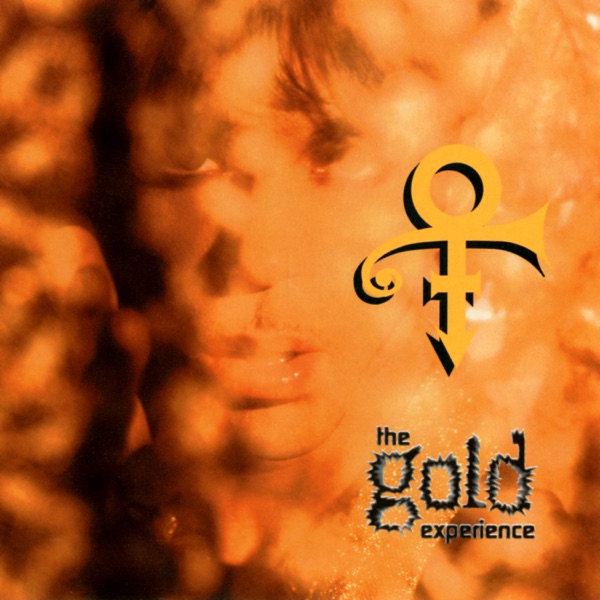
The Most Beautiful Girl in the World
Prince · The Gold Experience
Gorgeous love song that occasionally slides into worshiping the beloved herself.
Where the words land
Signal: Edifying, leaning worth weighing.
What do these signals mean?
- Edifying: Points the heart toward God, truth, hope, or love.
- Worth Weighing: Real good and real concern together. Test it before you take it in.
- Strained: Strains against Scripture: leans toward what could dull or mislead.
- At Odds: At odds with Scripture: celebrates what it warns against. Little here builds up.
Weighed against Scripture
“U're the reason that God made a girl”
The LORD God also said, “It is not good for the man to be alone. I will make for him a suitable helper.” And out of the ground the LORD God formed every beast of the field and every bird of the air, and He brought them to the man to see what he would name each one. And whatever the man called each living creature, that was its name. The man gave names to all the livestock, to the birds of the air, and to every beast of the field. But for Adam no suitable helper was found. So the LORD God caused the man to fall into a deep sleep, and while he slept, He took one of the man’s ribs and closed up the area with flesh. And from the rib that the LORD God had taken from the man, He made a woman and brought her to him. And the man said: “This is now bone of my bones and flesh of my flesh; she shall be called ‘woman,’ for out of man she was taken.”
Echoes the wonder of companionship as a gift from God, even as the song credits the woman herself as the reason rather than God's design.
“after U all one can do is die”
“Enjoy life with your beloved wife all the days of the fleeting life that God has given you under the sun — all your fleeting days. For this is your portion in life and in your labor under the sun.”
Mirrors the Preacher's counsel to enjoy love fully in a fleeting life, savoring a beloved companion amid mortality.
“I could bow and feel proud in the light of this power”
“You shall have no other gods before Me. You shall not make for yourself an idol in the form of anything in the heavens above, on the earth below, or in the waters beneath. You shall not bow down to them or worship them; for I, the LORD your God, am a jealous God, visiting the iniquity of the fathers on their children to the third and fourth generations of those who hate Me,”
The language of bowing before another's 'power' brushes against worship language reserved for God, even in a romantic context.
The song as a whole
“How beautiful you are, my darling— how very beautiful! Your eyes are like doves behind your veil. Your hair is like a flock of goats streaming down Mount Gilead. Your teeth are like a flock of newly shorn sheep coming up from the washing; each has its twin, and not one of them is lost. Your lips are like a scarlet ribbon, and your mouth is lovely. Your brow behind your veil is like a slice of pomegranate. Your neck is like the tower of David, built with rows of stones; on it hang a thousand shields, all of them shields of warriors. Your breasts are like two fawns, twins of a gazelle grazing among the lilies. Before the day breaks and the shadows flee, I will make my way to the mountain of myrrh and to the hill of frankincense. You are altogether beautiful, my darling; in you there is no flaw.”
The song's overall rapture at a lover's beauty resembles the exuberant, unashamed praise of a beloved found in Scripture's own love poetry.
In short
This is Prince at his most tender, a love song built entirely around adoration of one woman, so complete it borders on worship language. There's real beauty here: delight in another person, gratitude for love, awareness of mortality sharpening affection. But God is mentioned only as a device to amplify the compliment, not as the object of praise himself, and the devotion given to the woman sometimes crowds out any higher reference point.
- Spiritual posture
Invokes God almost as a poetic flourish to elevate the beloved, rather than pointing toward Him; the devotion is wholly aimed at the woman, even edging toward worshipful language for her.
- Apparent intent
Written as pure, heartfelt praise of a romantic love; its intent is to express overwhelming adoration, not to instruct or mislead.
What do these ratings mean?
- Lyrical content, what the words say on the surface. Clean: nothing coarse, sexual or violent. Mild: a trace of it, by allusion or a rare word. Strong: profanity, sex or violence in plain words. Explicit: graphic, or sin held up to admire.
- Spiritual posture, where the song's heart points. God-honoring: toward God, truth or hope. Searching: honestly reaching or wrestling toward truth, without arriving. Neutral: spiritually indifferent; neither reaches nor rejects. Dark: despairing, nihilistic, self-exalting or hostile to God.
- Apparent intent, what the song is for. Edifying: worship, encouragement, honest lament. Cathartic: letting grief, anger or longing out, told honestly. Ambiguous: hard to say what the song is for. Harmful: celebrates evil, mocks faith or draws toward sin.
Does this song's love for another person leave room for love of God, or does it put a person where God belongs?
An AI-assisted reading. It can misread a lyric, a metaphor or a song’s intent.


