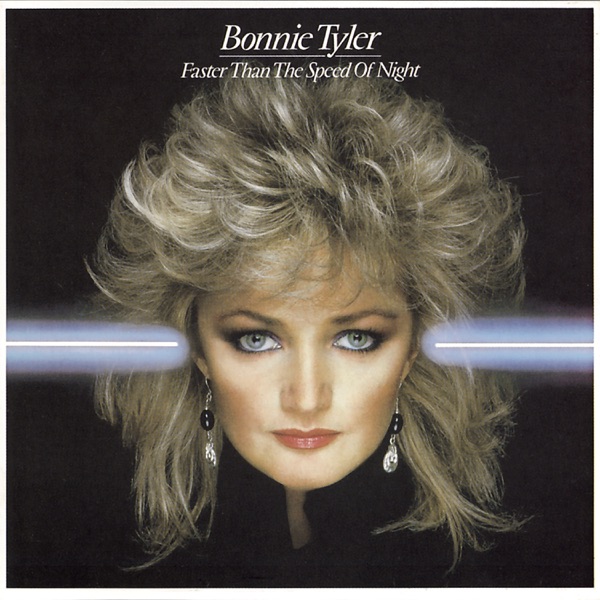
Total Eclipse of the Heart
Bonnie Tyler · Faster Than the Speed of Night
A dramatic ache for love that never looks beyond it for hope.
Where the words land
Signal: Worth Weighing, leaning strained.
What do these signals mean?
- Edifying: Points the heart toward God, truth, hope, or love.
- Worth Weighing: Real good and real concern together. Test it before you take it in.
- Strained: Strains against Scripture: leans toward what could dull or mislead.
- At Odds: At odds with Scripture: celebrates what it warns against. Little here builds up.
Weighed against Scripture
“Every now and then I get a little bit lonely”
The LORD God also said, “It is not good for the man to be alone. I will make for him a suitable helper.”
The ache for companionship voiced here reflects the created longing not to be alone, though here it's aimed entirely at another person rather than God.
“I really need you tonight”
This is what the LORD says: “Cursed is the man who trusts in mankind, who makes mere flesh his strength and turns his heart from the LORD.
The song places total reliance and hope for wholeness in another human being, the very trust Scripture warns against placing in flesh alone.
“Now there's only love in the dark”
“Why are you downcast, O my soul? Why the unease within me? Put your hope in God, for I will yet praise Him for the salvation of His presence.”
The psalmist's inner turmoil turns toward hope in God; the song's darkness stays unresolved, with no horizon beyond the relationship itself.
The song as a whole
“Love is patient, love is kind. It does not envy, it does not boast, it is not proud. It is not rude, it is not self-seeking, it is not easily angered, it keeps no account of wrongs. Love takes no pleasure in evil, but rejoices in the truth. It bears all things, believes all things, hopes all things, endures all things.”
The song's vision of love is frantic and consuming rather than patient and steady, a picture of need more than the selfless love Paul describes.
In short
This is a sweeping, theatrical song about romantic desperation: falling apart without someone's presence, needing them to feel whole. It's emotionally vivid but entirely self-contained, orbiting human love with no larger hope in view. There's nothing destructive here, just an intense, somewhat anxious portrait of needing another person to hold the darkness at bay.
- Spiritual posture
A love song consumed with desperate human longing and emotional turmoil, with no reach toward anything beyond the relationship itself.
- Apparent intent
An operatic ballad meant to dramatize the ache of romantic need and heartbreak, not to instruct or mislead.
What do these ratings mean?
- Lyrical content, what the words say on the surface. Clean: nothing coarse, sexual or violent. Mild: a trace of it, by allusion or a rare word. Strong: profanity, sex or violence in plain words. Explicit: graphic, or sin held up to admire.
- Spiritual posture, where the song's heart points. God-honoring: toward God, truth or hope. Searching: honestly reaching or wrestling toward truth, without arriving. Neutral: spiritually indifferent; neither reaches nor rejects. Dark: despairing, nihilistic, self-exalting or hostile to God.
- Apparent intent, what the song is for. Edifying: worship, encouragement, honest lament. Cathartic: letting grief, anger or longing out, told honestly. Ambiguous: hard to say what the song is for. Harmful: celebrates evil, mocks faith or draws toward sin.
Does this song's picture of needing someone to feel whole match where you actually place your hope?
An AI-assisted reading. It can misread a lyric, a metaphor or a song’s intent.