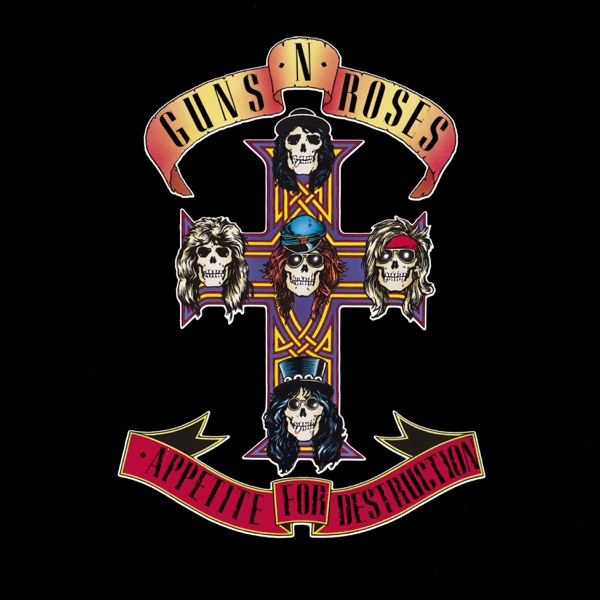
Welcome To The Jungle
Guns N' Roses · Appetite For Destruction
A snarling warning about a predatory world with no way out offered.
Where the words land
Signal: Strained, leaning worth weighing.
What do these signals mean?
- Edifying: Points the heart toward God, truth, hope, or love.
- Worth Weighing: Real good and real concern together. Test it before you take it in.
- Strained: Strains against Scripture: leans toward what could dull or mislead.
- At Odds: At odds with Scripture: celebrates what it warns against. Little here builds up.
Weighed against Scripture
“We are the people that can find whatever you may need”
“With her great persuasion she entices him; with her flattering lips she lures him. He follows her on impulse, like an ox going to the slaughter, like a deer bounding into a trap, until an arrow pierces his liver, like a bird darting into a snare— not knowing it will cost him his life.”
The seductress's smooth promises lead to ruin, just as this song's offer of 'everything you want' conceals the disease and bleeding to come.
“I want to hear you scream”
“Be sober-minded and alert. Your adversary the devil prowls around like a roaring lion, seeking someone to devour.”
The predator imagery of a roaring lion seeking someone to devour mirrors the jungle's hunger for victims rather than any call to resist it.
“You're in the jungle, baby, you're gonna die”
I said to myself, “Come now, I will test you with pleasure; enjoy what is good!” But it proved to be futile. I said of laughter, “It is folly,” and of pleasure, “What does it accomplish?”
Where Ecclesiastes names the emptiness of chasing pleasure and concludes it is vanity, this song stops at the thrill and threat without that reflective turn.
The song as a whole
“Those who want to be rich, however, fall into temptation and become ensnared by many foolish and harmful desires that plunge them into ruin and destruction. For the love of money is the root of all kinds of evil. By craving it, some have wandered away from the faith and pierced themselves with many sorrows.”
Desire paired with money here becomes a trap that ensnares and destroys, exactly the warning Paul gives about chasing wealth and appetite.
In short
This is a vivid, theatrical warning about the predatory world of fame, drugs, and sex dressed as a city/jungle that devours newcomers. It doesn't celebrate that world so much as snarl about its danger, but it never offers an alternative or any hope beyond survival instinct. The menace is the point, not a path out of it.
- Lyrical content
Predatory, sexualized menace and violent imagery (bleeding, serpentine, death) without explicit profanity but plenty of darkness implied.
- Spiritual posture
The city/jungle is personified as a devouring predator; the song revels in the seduction and destruction rather than mourning it.
- Apparent intent
More cautionary storytelling and shock theater about fame, drugs, and the music industry's underbelly than a straightforward endorsement, but it doesn't offer any way out.
What do these ratings mean?
- Lyrical content, what the words say on the surface. Clean: nothing coarse, sexual or violent. Mild: a trace of it, by allusion or a rare word. Strong: profanity, sex or violence in plain words. Explicit: graphic, or sin held up to admire.
- Spiritual posture, where the song's heart points. God-honoring: toward God, truth or hope. Searching: honestly reaching or wrestling toward truth, without arriving. Neutral: spiritually indifferent; neither reaches nor rejects. Dark: despairing, nihilistic, self-exalting or hostile to God.
- Apparent intent, what the song is for. Edifying: worship, encouragement, honest lament. Cathartic: letting grief, anger or longing out, told honestly. Ambiguous: hard to say what the song is for. Harmful: celebrates evil, mocks faith or draws toward sin.
Does this song's vivid portrayal of temptation and danger sharpen your discernment, or just let you linger in the thrill of it?
An AI-assisted reading. It can misread a lyric, a metaphor or a song’s intent.