Fortnight (feat. Post Malone)
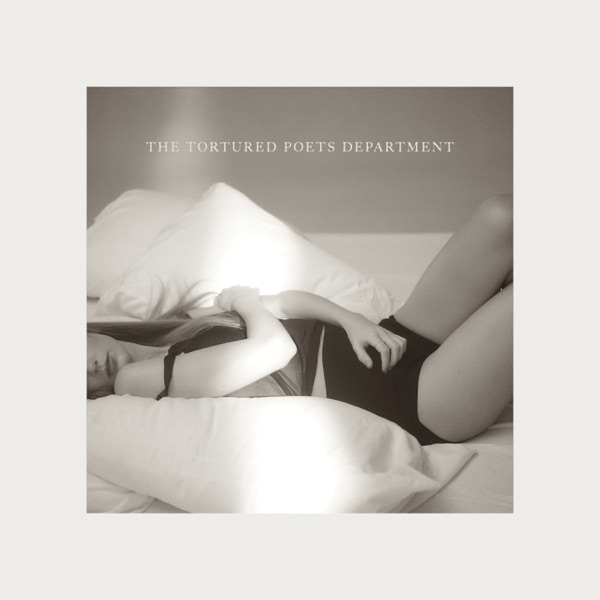
Taylor Swift · THE TORTURED POETS DEPARTMENT
A catchy loop of obsession and jealousy with no way out offered.
Where the words land
Signal: Strained, leaning worth weighing.
What do these signals mean?
- Edifying: Points the heart toward God, truth, hope, or love.
- Worth Weighing: Real good and real concern together. Test it before you take it in.
- Strained: Strains against Scripture: leans toward what could dull or mislead.
- At Odds: At odds with Scripture: celebrates what it warns against. Little here builds up.
Weighed against Scripture
“I was a functioning alcoholic”
“Who has woe? Who has sorrow? Who has contentions? Who has complaints? Who has needless wounds? Who has bloodshot eyes? Those who linger over wine, who go to taste mixed drinks.”
The song treats numbing through alcohol as a passing detail rather than something that cost her; Proverbs names the woe in it plainly.
“Your wife waters flowers, I want to kill her”
“You have heard that it was said, ‘Do not commit adultery.’ But I tell you that anyone who looks at a woman to lust after her has already committed adultery with her in his heart.”
Jesus locates adultery and violent jealousy in the heart itself; the song lingers in that very covetous rage without pulling back from it.
“And I love you, it's ruining my life”
“Anything my eyes desired, I did not deny myself. I refused my heart no pleasure. For my heart took delight in all my work, and this was the reward for all my labor. Yet when I considered all the works that my hands had accomplished and what I had toiled to achieve, I found everything to be futile, a pursuit of the wind; there was nothing to be gained under the sun.”
Like the Preacher chasing pleasure and finding it hollow, the singer names her own obsession as self-destructive even as she can't let go of it.
The song as a whole
“I cried out to God; I cried aloud to God to hear me. In the day of trouble I sought the Lord; through the night my outstretched hands did not grow weary; my soul refused to be comforted. I remembered You, O God, and I groaned; I mused and my spirit grew faint. Selah”
The psalmist's lament eventually turns toward remembering God's faithfulness; this song's ache stays circular, repeating the wound without ever turning anywhere.
Words of Christ are set in red.
In short
This is a stylized, theatrical account of an affair's aftermath: obsession, jealousy, and emotional paralysis dressed up in wry, almost absurdist imagery. It doesn't glamorize the pain so much as sit inside it, looping through the same ache without resolution. There's real honesty about how desire can curdle into something destructive, but no turn toward healing or perspective.
- Lyrical content
No profanity, but violent imagery ('I want to kill her/him') and references to alcoholism and affairs are used as emotional hyperbole within a melodrama of longing.
- Spiritual posture
The song circles obsession, grief, and numbness with no reach toward hope or healing; the narrator stays trapped in the loop of 'endless February' and self-destructive longing.
- Apparent intent
This reads as theatrical catharsis, a stylized portrait of heartbreak and instability rather than an endorsement of the feelings it describes, but it offers no resolution or redemptive turn.
What do these ratings mean?
- Lyrical content, what the words say on the surface. Clean: nothing coarse, sexual or violent. Mild: a trace of it, by allusion or a rare word. Strong: profanity, sex or violence in plain words. Explicit: graphic, or sin held up to admire.
- Spiritual posture, where the song's heart points. God-honoring: toward God, truth or hope. Searching: honestly reaching or wrestling toward truth, without arriving. Neutral: spiritually indifferent; neither reaches nor rejects. Dark: despairing, nihilistic, self-exalting or hostile to God.
- Apparent intent, what the song is for. Edifying: worship, encouragement, honest lament. Cathartic: letting grief, anger or longing out, told honestly. Ambiguous: hard to say what the song is for. Harmful: celebrates evil, mocks faith or draws toward sin.
Does this song help you name and release an old ache, or does it pull you back into circling one?
An AI-assisted reading. It can misread a lyric, a metaphor or a song’s intent.