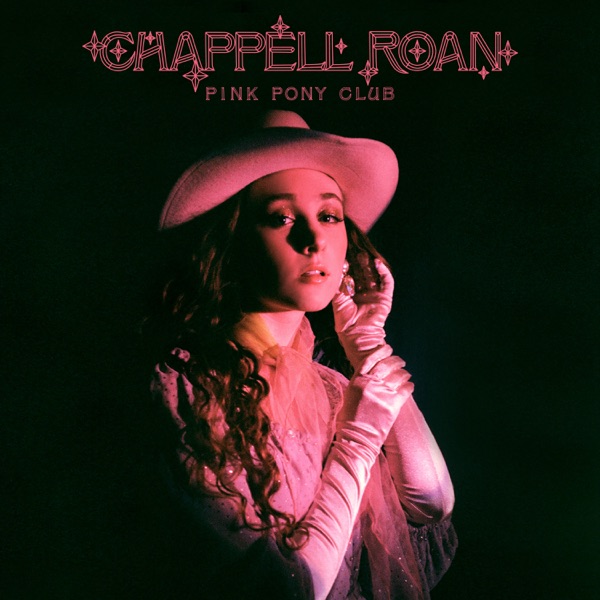
Pink Pony Club
Chappell Roan · Pink Pony Club - Single
A joyful runaway anthem that trades home's approval for self-defined freedom.
Where the words land
Signal: Worth Weighing, leaning strained.
What do these signals mean?
- Edifying: Points the heart toward God, truth, hope, or love.
- Worth Weighing: Real good and real concern together. Test it before you take it in.
- Strained: Strains against Scripture: leans toward what could dull or mislead.
- At Odds: At odds with Scripture: celebrates what it warns against. Little here builds up.
Weighed against Scripture
“Won't make my mama proud, it's gonna cause a scene”
“Honor your father and mother, so that your days may be long in the land that the LORD your God is giving you.”
The tension between honoring parents and pursuing personal freedom sits at the heart of this song; the narrator knows her choice grieves her mother but presses on anyway.
“Still love you and Tennessee, you're always on my mind”
“Honor your father and mother” (which is the first commandment with a promise), “that it may go well with you and that you may have a long life on the earth.”
Even amid rebellion the song retains real affection for the family left behind, which keeps the posture more wistful than defiant.
The song as a whole
“For You formed my inmost being; You knit me together in my mother’s womb. I praise You, for I am fearfully and wonderfully made. Marvelous are Your works, and I know this very well.”
The song locates identity and belonging in a place and lifestyle, whereas Scripture roots identity in being fearfully and wonderfully made by God.
Then Jesus said, “There was a man who had two sons. The younger son said to him, ‘Father, give me my share of the estate.’ So he divided his property between them. After a few days, the younger son got everything together and journeyed to a distant country, where he squandered his wealth in wild living. After he had spent all he had, a severe famine swept through that country, and he began to be in need. So he went and hired himself out to a citizen of that country, who sent him into his fields to feed the pigs. He longed to fill his belly with the pods the pigs were eating, but no one would give him a thing. Finally he came to his senses and said, ‘How many of my father’s hired servants have plenty of food, but here I am, starving to death! I will get up and go back to my father and say to him, “Father, I have sinned against heaven and against you. I am no longer worthy to be called your son. Make me like one of your hired servants.”’ So he got up and went to his father. But while he was still in the distance, his father saw him and was filled with compassion. He ran to his son, embraced him, and kissed him. The son declared, ‘Father, I have sinned against heaven and against you. I am no longer worthy to be called your son.’ But the father said to his servants, ‘Quick! Bring the best robe and put it on him. Put a ring on his finger and sandals on his feet. Bring the fattened calf and kill it. Let us feast and celebrate. For this son of mine was dead and is alive again! He was lost and is found!’ So they began to celebrate.
Like the prodigal, the narrator leaves home for a far country seeking her own life, though the song never returns to the parent in the way the parable does.
Words of Christ are set in red.
In short
This is a coming-out and coming-of-age anthem about leaving a small town to find freedom and self-expression, told with real tenderness toward the family left behind. It's not an attack on faith or home, just an honest account of choosing a different, riskier path and still loving the people who disapprove. The joy here is genuine, even if what it's chasing is mostly self-defined.
- Lyrical content
No profanity; references to a nightclub, heels, dancing, and a vague mention of lovers in a bathroom. Mostly scene-setting imagery.
- Spiritual posture
The song centers on self-discovery and chasing a new identity and freedom, with no real reach toward God, only an invoked 'God, what have you done' from the mother's disapproving voice.
- Apparent intent
An autobiographical-style coming-of-age anthem about leaving home to live authentically; it's meant to be empowering and joyful rather than preachy or harmful.
What do these ratings mean?
- Lyrical content, what the words say on the surface. Clean: nothing coarse, sexual or violent. Mild: a trace of it, by allusion or a rare word. Strong: profanity, sex or violence in plain words. Explicit: graphic, or sin held up to admire.
- Spiritual posture, where the song's heart points. God-honoring: toward God, truth or hope. Searching: honestly reaching or wrestling toward truth, without arriving. Neutral: spiritually indifferent; neither reaches nor rejects. Dark: despairing, nihilistic, self-exalting or hostile to God.
- Apparent intent, what the song is for. Edifying: worship, encouragement, honest lament. Cathartic: letting grief, anger or longing out, told honestly. Ambiguous: hard to say what the song is for. Harmful: celebrates evil, mocks faith or draws toward sin.
Does the freedom this song celebrates point toward who you were made to be, or away from it?
An AI-assisted reading. It can misread a lyric, a metaphor or a song’s intent.


