With or Without You
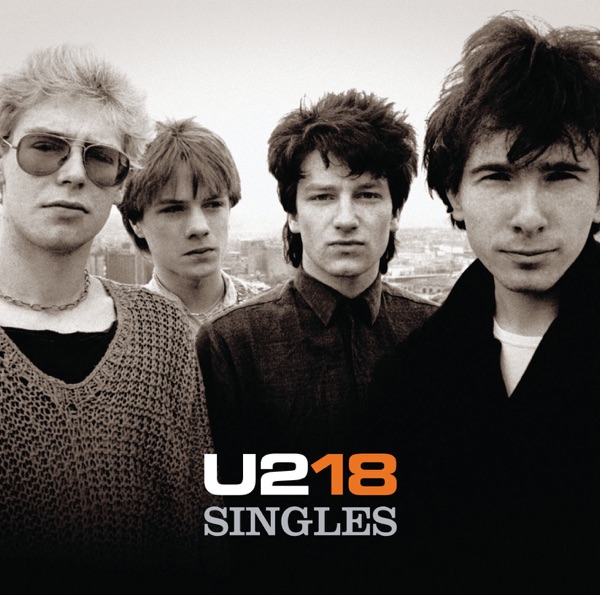
U2 · U218 Singles (Deluxe Edition)
A raw, searching love song caught between surrender and exhaustion.
Where the words land
Signal: Edifying, leaning worth weighing.
What do these signals mean?
- Edifying: Points the heart toward God, truth, hope, or love.
- Worth Weighing: Real good and real concern together. Test it before you take it in.
- Strained: Strains against Scripture: leans toward what could dull or mislead.
- At Odds: At odds with Scripture: celebrates what it warns against. Little here builds up.
Weighed against Scripture
“See the thorn twist in your side”
“Then Pilate took Jesus and had Him flogged. The soldiers twisted together a crown of thorns, set it on His head, and dressed Him in a purple robe.”
The thorn imagery recalls Christ's suffering, suggesting the song's longing is entangled with the image of a wounded, self-giving love.
“And you give yourself away”
“Greater love has no one than this, that he lay down his life for his friends.”
This repeated line captures total self-giving love, mirroring the costly love Jesus describes as the greatest kind.
“Nothing to win and nothing left to lose”
“But whatever was gain to me I count as loss for the sake of Christ. More than that, I count all things as loss compared to the surpassing excellence of knowing Christ Jesus my Lord, for whom I have lost all things. I consider them rubbish, that I may gain Christ”
Paul counts all things loss for the sake of Christ with hope and purpose, while the singer's emptied state feels more like weary surrender than triumphant release.
The song as a whole
“Whom have I in heaven but You? And on earth I desire no one besides You. My flesh and my heart may fail, but God is the strength of my heart and my portion forever.”
The psalmist's cry that he has nothing on earth he desires besides God parallels the singer's paradoxical need that can't be resolved either way.
“Set me as a seal over your heart, as a seal upon your arm. For love is as strong as death, its jealousy as unrelenting as Sheol. Its sparks are fiery flames, the fiercest blaze of all. Mighty waters cannot quench love; rivers cannot sweep it away. If a man were to give all the wealth of his house for love, his offer would be utterly scorned.”
The song's tangled ache between devotion and self-loss mirrors love's fierce, consuming hold described here, strong as death.
Words of Christ are set in red.
In short
This is a song about love stretched to its breaking point, caught between surrender and self-protection. Bono has described it as both a love song and a prayer, the ache of wanting someone (or Someone) so much it hurts to stay and hurts to leave. It doesn't resolve the tension; it just keeps circling it, which is its honesty and its ache.
- Spiritual posture
The song sits in tension between devotion and exhaustion, torn between surrender and self-preservation, echoing the ache of love that costs everything.
- Apparent intent
Bono has spoken of the song's layered meaning, part romantic longing, part wrestling with faith and surrender to God; it's meant to hold that tension, not resolve it.
What do these ratings mean?
- Lyrical content, what the words say on the surface. Clean: nothing coarse, sexual or violent. Mild: a trace of it, by allusion or a rare word. Strong: profanity, sex or violence in plain words. Explicit: graphic, or sin held up to admire.
- Spiritual posture, where the song's heart points. God-honoring: toward God, truth or hope. Searching: honestly reaching or wrestling toward truth, without arriving. Neutral: spiritually indifferent; neither reaches nor rejects. Dark: despairing, nihilistic, self-exalting or hostile to God.
- Apparent intent, what the song is for. Edifying: worship, encouragement, honest lament. Cathartic: letting grief, anger or longing out, told honestly. Ambiguous: hard to say what the song is for. Harmful: celebrates evil, mocks faith or draws toward sin.
Does the restless tension in this song mirror any longing in your own heart for love, human or divine, that never fully satisfies?
An AI-assisted reading. It can misread a lyric, a metaphor or a song’s intent.


